


Heritage · Early twentieth century
The Bungalow
A relic of the shikar era, standing among the Saja and the Sal since the early years of the twentieth century.
A piece of hunting history
Before the tents, and before the national park, there was the Bungalow.
Built in the heyday of the shikar, it is the oldest story on the estate — and much of the reason Saja and Sal feels the way it does.

Chapter I
The age of the shikar
In the early decades of the twentieth century, the forests of what were then the Central Provinces were famed hunting country. Officers of the Raj, forest surveyors and Indian princes came in pursuit of tiger and gaur, working from the verandas of dak bungalows and tented camps as they mapped the jungle and recorded its wildlife.
The Bungalow at Saja and Sal was raised in that era: a forest retreat to set out from at first light and return to by lamplight, with the day’s notes to be written up by the fire.

Chapter II
Built for the jungle
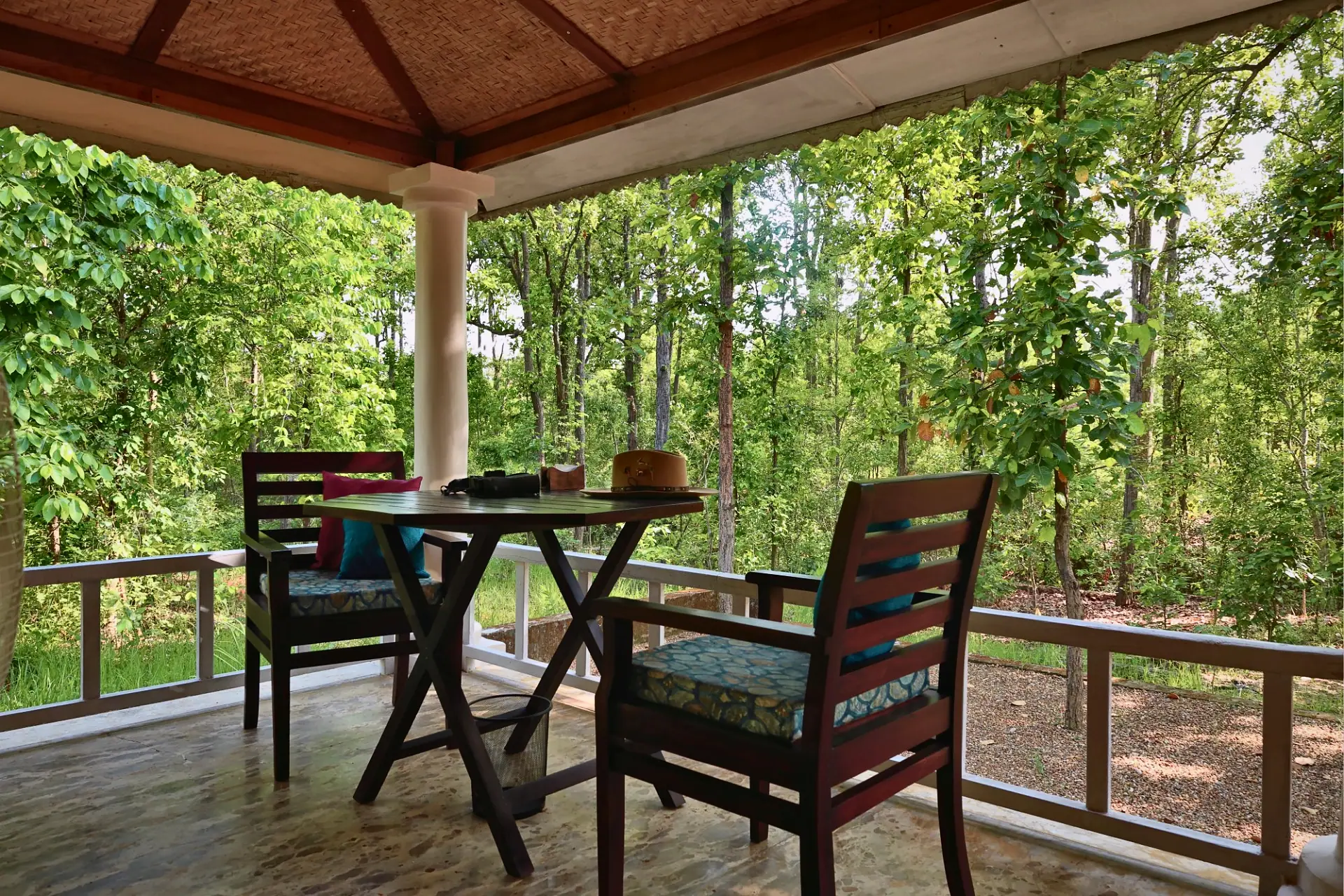
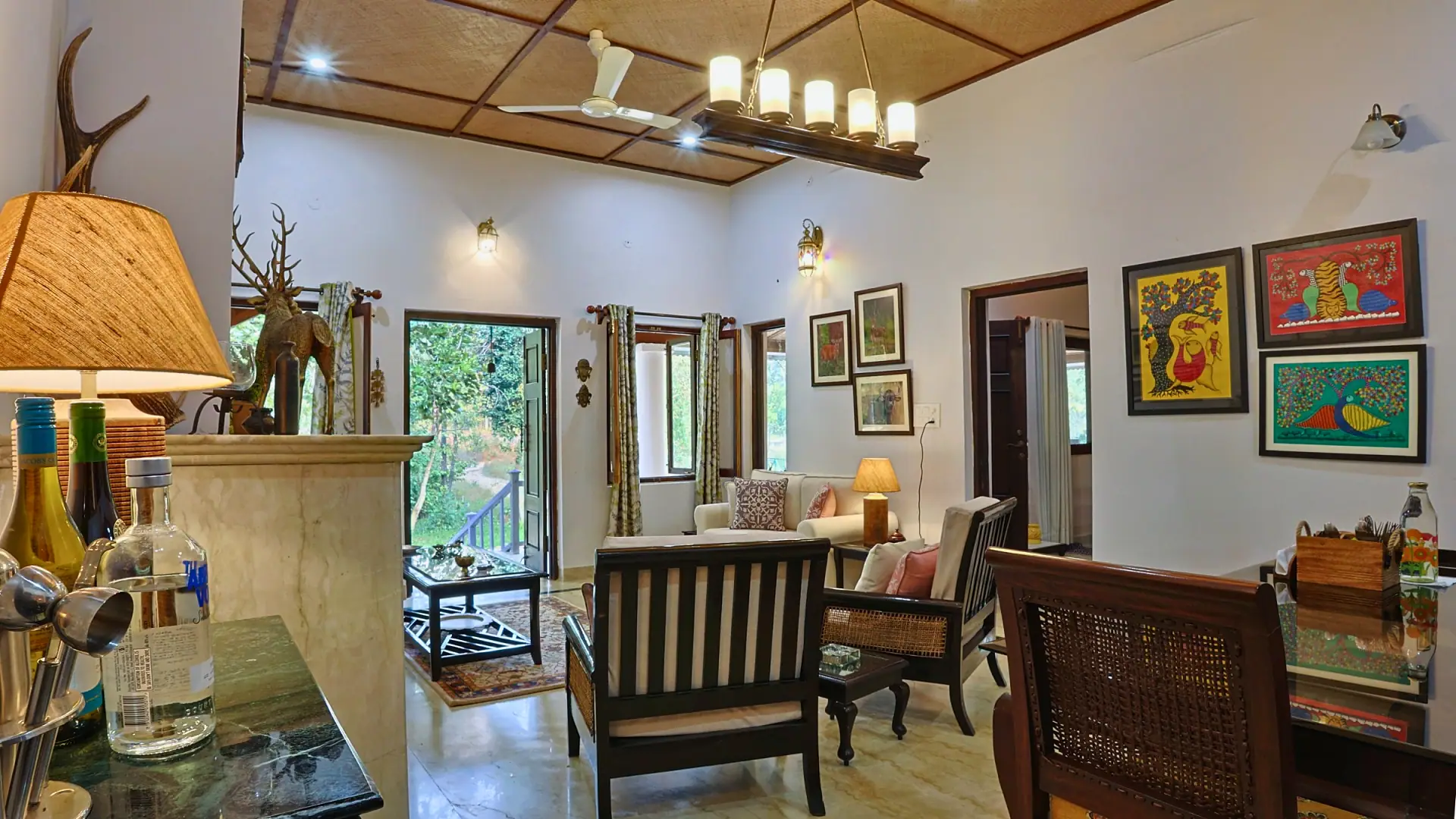
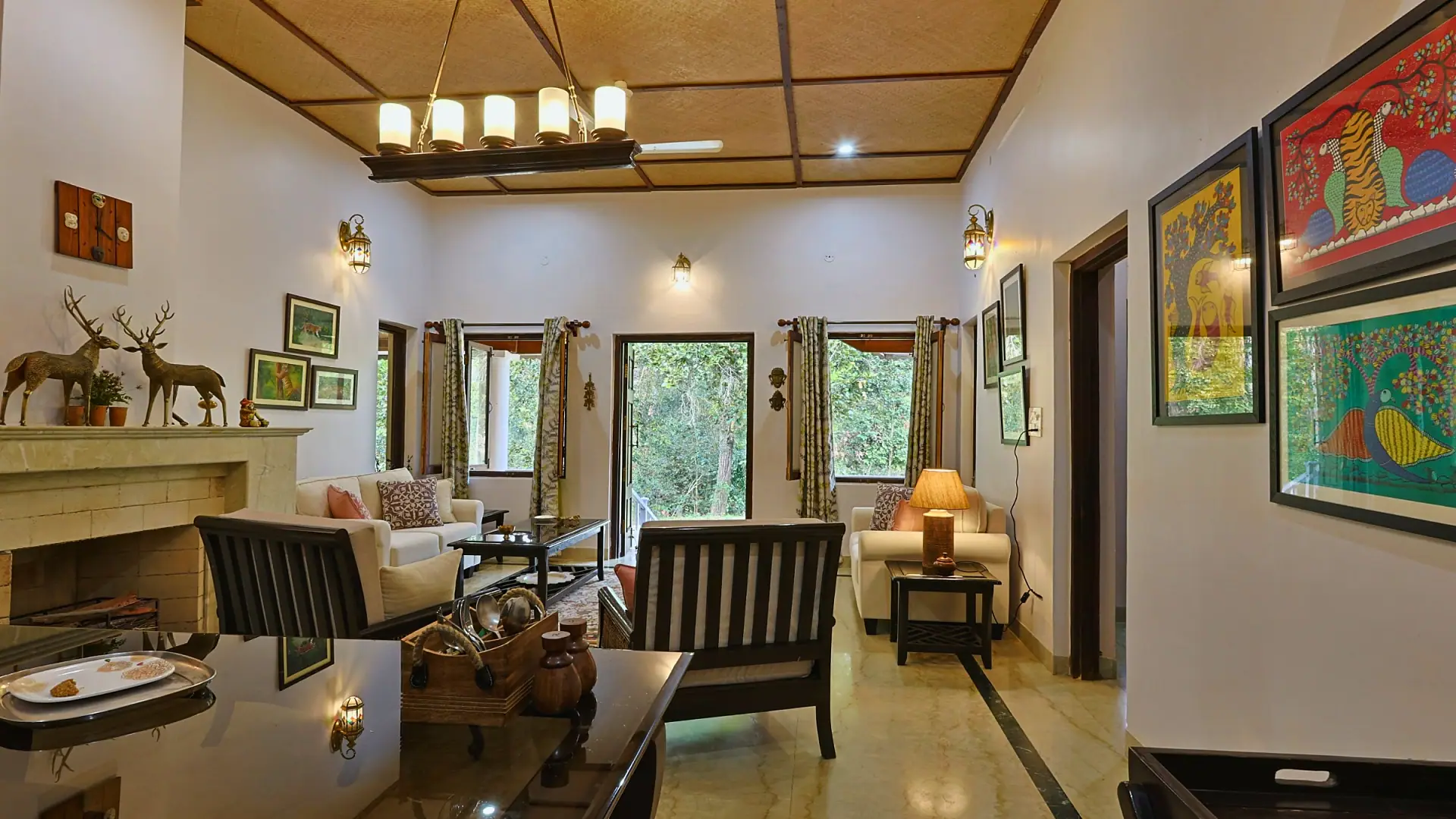
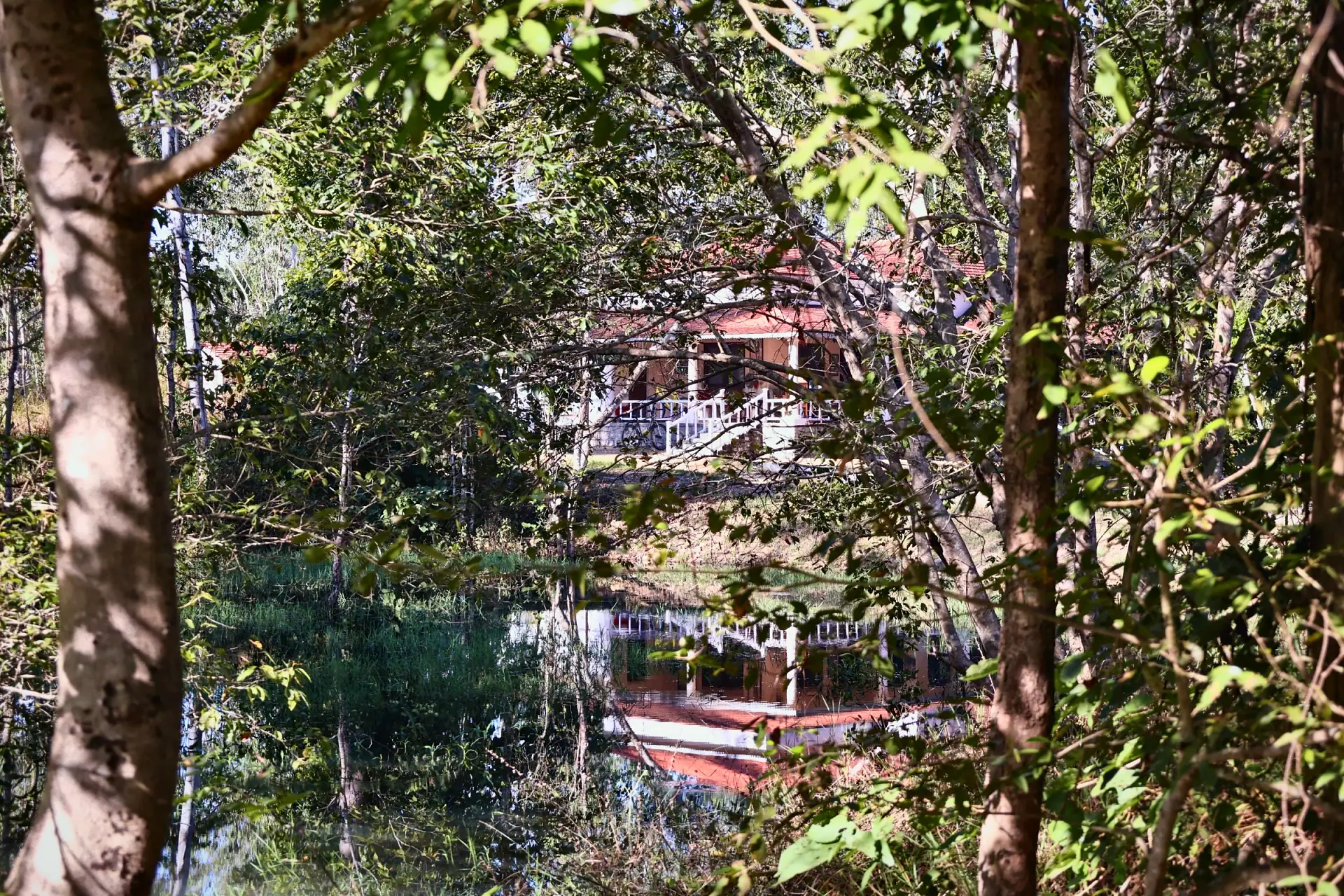
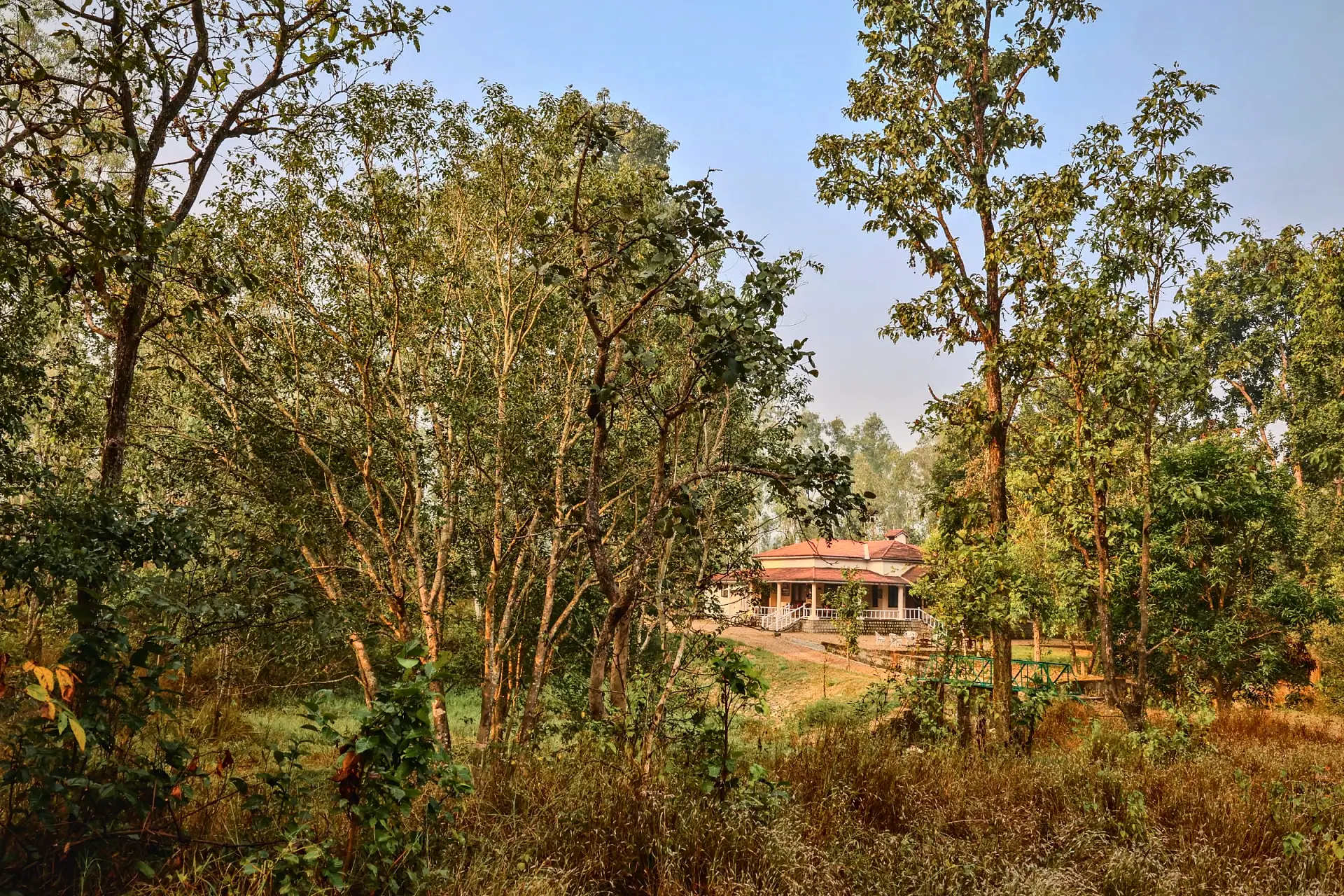
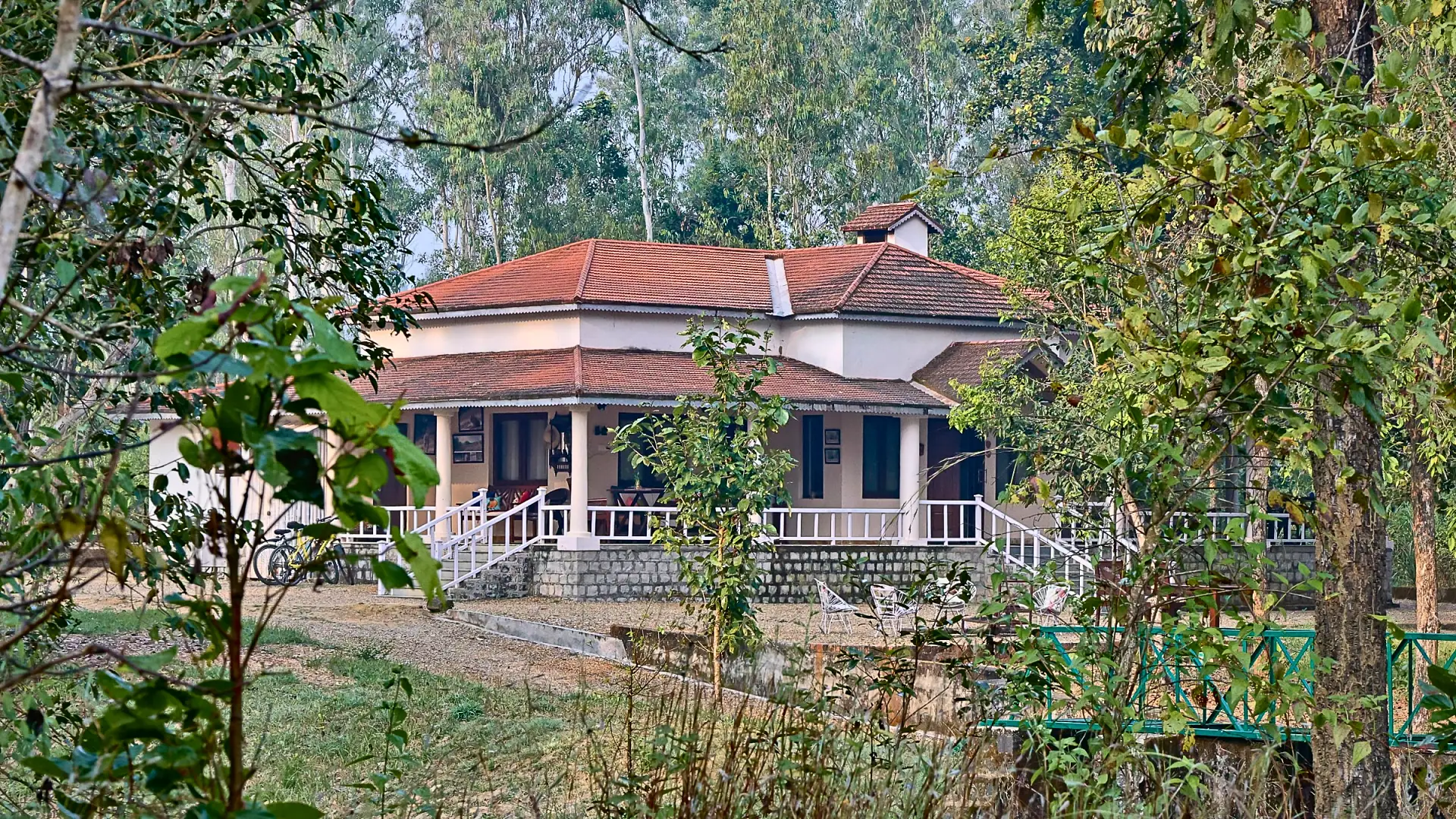
Picturesque and perfectly proportioned, the Bungalow is the archetype of classic style and good taste: a tiled roof, a wraparound veranda and a central living room with spacious rooms opening from it.
Victorian fireplaces kept out the chill of long jungle nights — and still do.
Chapter III
Among the Saja and the Sal
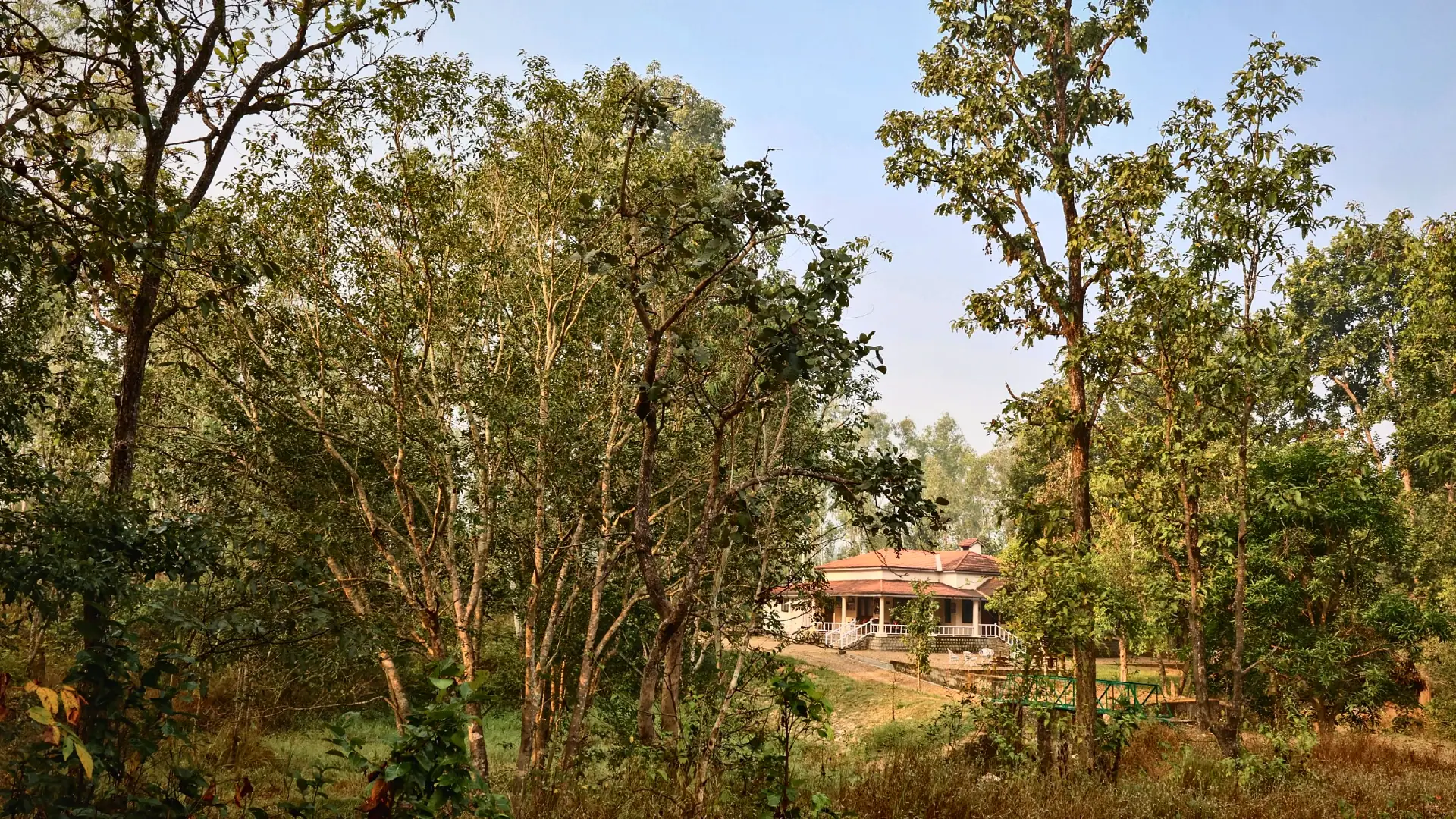
The Bungalow stands among majestic Saja and Sal trees, beside a tranquil stream, with a lake lying just next to it.
The estate takes its name from these two great trees of the Kanha forest: the Saja, its bark patterned like a crocodile’s hide, and the Sal, tall and straight, the tree that defines the jungle here.
Chapter IV
From hunting to conservation
- Early 1900s
The shikar years
The Bungalow is built while Kanha’s Sal forests are still hunting grounds, visited by shikar parties and the forest surveyors who mapped the jungle and recorded its wildlife.
- 1933
A first protection
Kanha’s forests are declared a wildlife sanctuary.
- 1955
A national park
On 1 June 1955, Kanha becomes a national park.
- 1970
Saving the barasingha
The hard-ground barasingha, found nowhere else on earth, falls to an estimated 66 animals. A long conservation effort in Kanha brings it back from the brink.
- 1973
A tiger reserve
Kanha is designated a tiger reserve.
- Today
The only shots are photographs
Trail cameras in front of the Bungalow record tigers passing in the night. The old hunting country has become one of India’s great tiger forests.
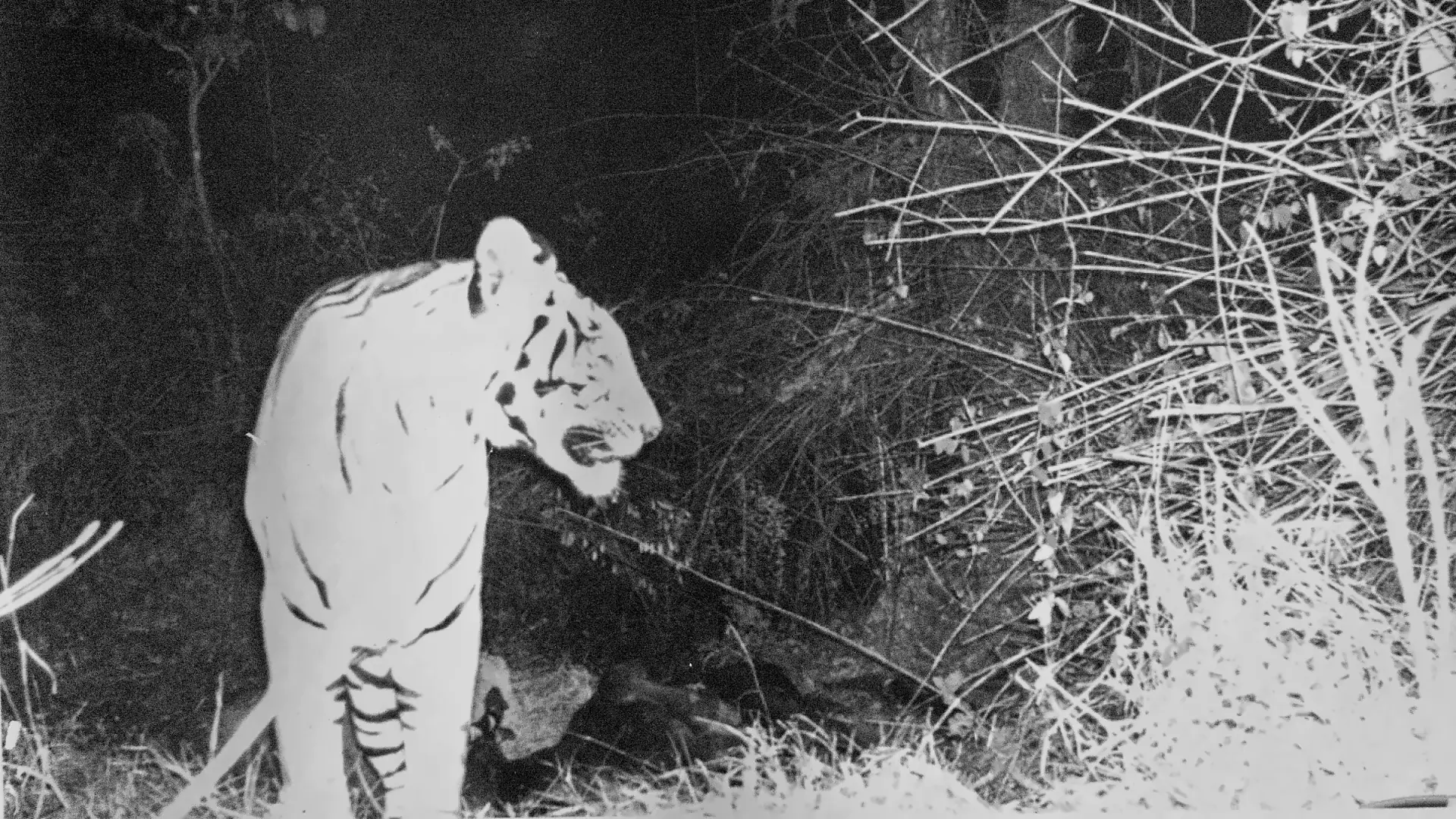
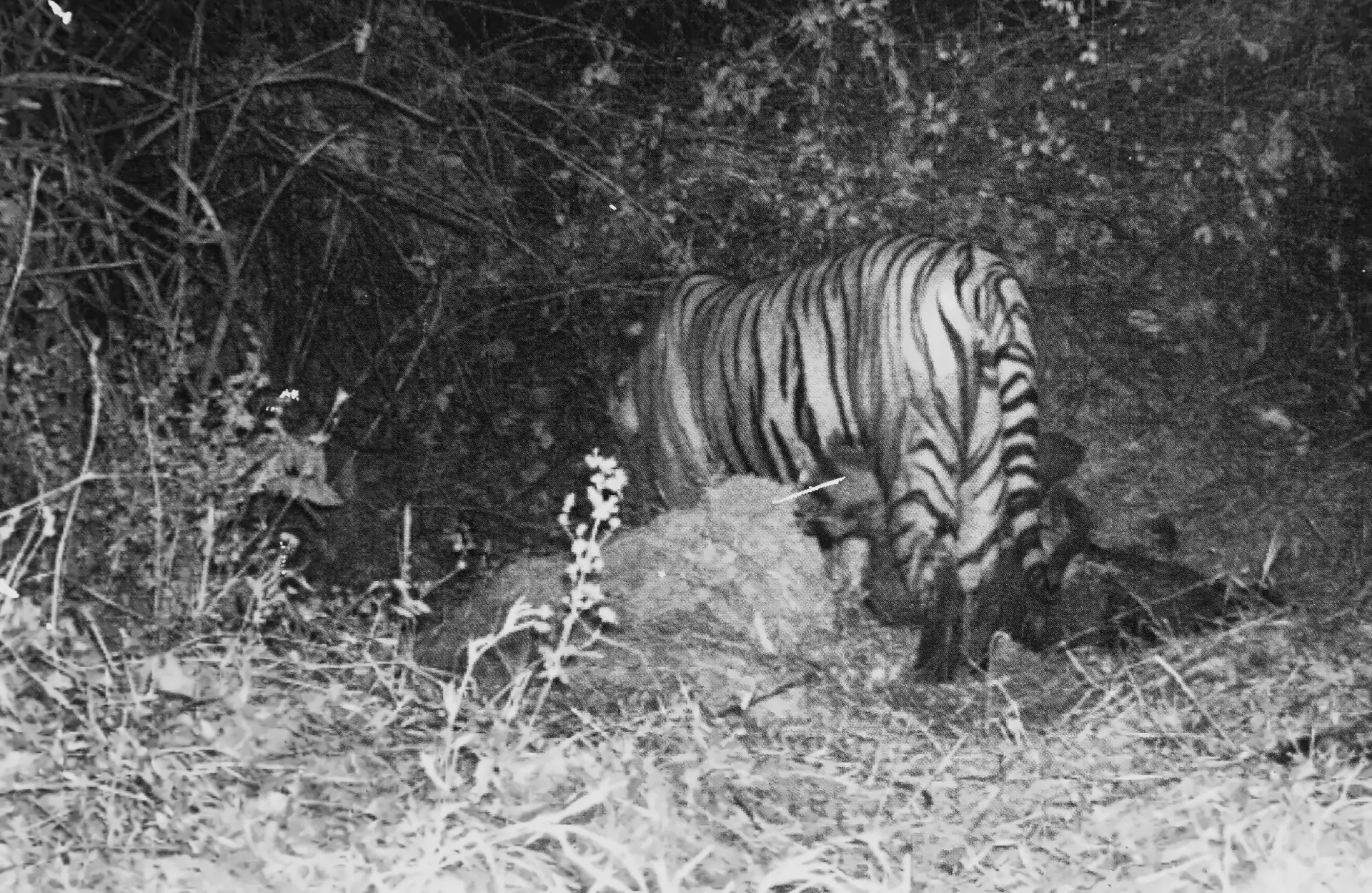
Trail-camera images, taken in front of the Bungalow.
The Bungalow today
Rooms full of stories
Antlers, paintings and period furniture, with the forest at every window.

Plan your stay
Make the old forest your own
Stay in the Chief’s Tent or the King’s Tent, a short walk through the trees from where the story began.